Ετικέτες

Εμφάνιση αναρτήσεων με ετικέτα Καταφύγια και "καταφύγια". Εμφάνιση όλων των αναρτήσεων

Παρασκευή 31 Ιανουαρίου 2025

Από τα Σπάτα στην Φλόριντα: Δείτε γιατί αντιδρούν οι φιλοζωικές οργανώσεις στην μεταφορά των δελφινιών


Αντιδράσεις σε Ελλάδα και Αμερική έχει προκαλέσει η ανακοίνωση της οργάνωσης Dolphin Project (9/01/25), σύμφωνα με την οποία, τον περασμένο Δεκέμβριο, το ενυδρείο Clearwater Marine Aquarium υπέβαλε στις αρμόδιες αμερικανικές αρχές (Εθνική Υπηρεσία Ωκεανών και Ατμόσφαιρας - NOAA) αίτημα για την άδεια εισαγωγής πέντε δελφινιών από το Αττικό Ζωολογικό Πάρκο. Το συγκεκριμένο ενυδρείο βρίσκεται στην Φλόριντα και αυτοπαρουσιάζεται ως καταφύγιο αφιερωμένο στην διάσωση και περίθαλψη των ζώων της θάλασσας, που παράλληλα προάγει την επιστημονική έρευνα και την επιμόρφωση του κοινού. 

"Με τις οδηγίες του επιτελείου επιστημονικών και ιατρικών εμπειρογνωμόνων μας, το Clearwater Marine Aquarium δεσμεύτηκε να εμπλουτίσει τον  κοινωνικό ιστό των δελφινιών, για το καλό των διασωθέντων τροφίμων του... Αυτά τα δελφίνια χρειάζονται ένα παντοτινό σπίτι, καθώς δεν μπορούν να επιβιώσουν χωρίς ανθρώπινη φροντίδα, για το υπόλοιπο της ζωής τους... Η πρωτοβουλία επιδιώκει να οδηγήσει στην δημιουργία μιας σωστής κοινωνικής ομάδας δελφινιών, προς όφελος της υγείας και της ευζωίας τους... Η προσήλωση του Clearwater Marine Aquarium στην διάσωση, αποκατάσταση, απελευθέρωση και επιστημονική έρευνα παραμένει σταθερή", έγραψαν οι εκπρόσωποι του ενυδρείου στα Μέσα Κοινωνικής Δικτύωσης. 

"Το Clearwater Marine Aquarium είναι ένα από τα 30 πιστοποιημένα από την ΑΜΜPA (Alliance of Marine Mammal Parks and Aquariums) θαλάσσια πάρκα και ενυδρεία των Ηνωμένων Πολιτειών της Αμερικής, γνωστό για την προοδευτική προσέγγιση του στην ευημερία των ζώων, την αφοσίωση στην έρευνα και τη διατήρηση των ειδών", δηλώνει  σε σχετική ανακοίνωση του (22/01/25) το Αττικό Ζωολογικό  Πάρκο, και επισημαίνει ότι "δεν υπάρχει κανένα απολύτως θέμα πώλησης των δελφινιών", εξηγώντας ότι ανάμεσα στα νόμιμα αδειοδοτημένα πάρκα, μέλη της ΕΑΖΑ (Ευρωπαϊκή Ένωση Ζωολογικών Πάρκων και Ενυδρείων), δεν γίνονται αγοραπωλησίες... "Συμμετέχουμε ενεργά στα προγράμματα αναπαραγωγής απειλουμένων ειδών της ΕΑΖΑ (EEPs και ESBs)", διευκρινίζει. "Επειδή, σε διάφορα δημοσιεύματα έγινε ονομαστική αναφορά στους Λειψούς, κρίνεται σκόπιμο να αναφερθεί, ότι αυτή την στιγμή δεν υπάρχει κάποιο αδειοδοτημένο καταφύγιο θαλάσσιων θηλαστικών στην περιοχή, ούτε σχετικές εγκαταστάσεις και εξειδικευμένο προσωπικό, αλλά μόνο διακηρυγμένη πρόθεση, να δημιουργηθεί ένα", προσθέτει.


Στην βάση καταγραφής κητωδών "Ceta Base", στο Αττικό Ζωολογικό Πάρκο (μετά και από την απομάκρυνση της Veera) φαίνονται σήμερα καταγεγραμμένα εννέα (9) ρινοδέλφινα (bottlenose dolphins), όλα αρσενικά, και στο Clearwater Marine Aquarium πέντε (5), δύο αρσενικά και τρία θηλυκά. Όλα τα δελφίνια που βρίσκονται σήμερα στο Αττικό Πάρκο έχουν γεννηθεί στην αιχμαλωσία. Δύο από αυτά (ο Ιάσονας και ο Ερμής, τα πρώτα που ήρθαν στην Ελλάδα, το 2010) είναι ρινοδέλφινα της Μαύρης Θάλασσας που γεννήθηκαν στο λεγόμενο "Εθνικό Μουσείο της Λιθουανίας", και οι άγριοι γονείς τους ζουν ακόμη (αιχμαλωτισμένοι) εκεί. Τρία εισήχθησαν (το 2020) από το δελφινάριο της Βαρκελώνης που έκλεισε. Το 2016 είχε προηγηθεί η εισαγωγή άλλων τεσσάρων δελφινιών, δύο που ταξίδεψαν στην Ελλάδα από την Γαλλία, και άλλα δύο από την Φινλανδία (από τα δελφινάρια "Park Astérix" και "Särkänniemi" αντιστοίχως, που επίσης έκλεισαν). Όλες οι "εισαγωγές - εξαγωγές"  πραγματοποιήθηκαν πάρα τις αντιδράσεις και διαμαρτυρίες από την Ελλάδα και το εξωτερικό. 

Τα δελφίνια του Clearwater Marine Aquarium έχουν γεννηθεί ελεύθερα και προέρχονται από διάσωση, αλλά το ενυδρείο υποστηρίζει πως δεν είναι κατά κανένα τρόπο* απελευθερώσιμα γιατί φέρουν αναπηρίες. Είναι η πρώτη φορά στα χρονικά της λειτουργίας του που το Clearwater Marine Aquarium προτίθεται να φιλοξενήσει δελφίνια προερχόμενα από άλλο δελφινάριο. 


Από όλα τα παραπάνω, προκύπτουν κάποια ερωτήματα: 1) θα μπορέσει το ενυδρείο στην Φλόριντα (που τώρα φαίνεται ότι, λόγω οικονομικών προβλημάτων, αναγκάζεται να κάνει και απολύσεις προσωπικού) να αναλάβει νέες διασώσεις, καλύπτοντας παράλληλα και τα έξοδα πέντε επιπλέον δελφινιών; 2) Αν και ένα κέντρο διάσωσης δεν αναπαράγει ζώα σε αιχμαλωσία, μήπως σκοπεύει τώρα το Clearwater Marine Aquarium να εντάξει τα δελφίνια του Αττικού Πάρκου σε κάποιο πρόγραμμα αναπαραγωγής, γι' αυτό και τα θέλει τόσο πολύ; 3) Πόσα δελφίνια έχει αυτή τη στιγμή το Αττικό Πάρκο στην δεξαμενή του; Αν η καταγραφή της Ceta Base ανταποκρίνεται στην πραγματικότητα, τι θ' απογίνουν τα υπόλοιπα τέσσερα δελφίνια, και γιατί κανείς δεν αναφέρεται σ' αυτά; 


Σε δημοσίευμα της Animals 24-7 (από τις 12 Ιανουαρίου 2025) με τίτλο "Fly five dolphins from tanks in Greece to tanks in Florida? O’Barry says no"**, εκτίθεται η αντίθετη άποψη για την ταυτότητα του Clearwater Marine Aquarium, το οποίο παρουσιάζεται περισσότερο ως κερδοφόρος τουριστική ατραξιόν και λιγότερο ως καταφύγιο. Το δημοσίευμα εμπεριέχει μια σύντομη αναδρομή στην ιστορία του ενυδρείου, και στην ιστορία των δελφινιών που πέρασαν την ζωή τους εκεί, μεταξύ των οποίων η Winter, το διάσημο ρινοδέλφινο με την ακρωτηριασμένη ουρά που εμφανίστηκε σε δύο ταινίες του Hollywood, (2011 και 2014), πριν πεθάνει από συστροφή εντέρου σε ηλικία 16 ετών. 

Το Clearwater Marine Aquarium έσωσε την Winter από βέβαιο θάνατο, δεν έκανε όμως απολύτως τίποτα για να βελτιώσει την ποιότητα της ζωής της. Αντιθέτως την χρησιμοποίησαν ως έκθεμα, χρεώνοντας στους επισκέπτες 249 ευρώ κατ' άτομο, προκειμένου να την αγγίξουν, να την φιλήσουν και να φωτογραφηθούν μαζί της. Η Winter φορούσε την προσθετική της ουρά μόνο για να εκτελεί με κόπο το νούμερο της σαν ζώο του τσίρκο, ενισχύοντας τον μύθο της δελφινοθεραπείας [DAT] και προωθώντας στον κόσμο το λάθος μήνυμα για την ταυτότητα των δελφινιών. "Χαίρομαι που σώθηκε το δελφίνι αλλά δεν είμαι fan της ‘Dolphin Tale’", έγραφε ο Michael Mountain στο Earth in Transition εκείνη την εποχή. 

Δείτε το "The Dolphin Truth", ένα σύντομο βίντεο που δημιουργήθηκε το 2014, ως απάντηση στην ταινία "Dolphin Tale" (που απέφερε κέρδη 95,9 εκατομμυρίων δολαρίων) και την ρητορική των pseudo-sanctuaries που παρουσιάζουν την αιχμαλωσία ως φροντίδα για τα ζώα, και την εκμετάλλευση ως εκπαίδευση για το κοινό. "Νοθεύουν την γλώσσα", λέει ο Ric O'Barry. Διαστρεβλώνουν την έννοια των λέξεων. Εμφανίζουν τα δελφίνια ως "πρεσβευτές", και τα εκμεταλλεύονται για να πουλήσουν εισιτήρια. Αυτό που παρουσιάζουν ως επιμορφωτική εμπειρία δεν είναι τίποτα περισσότερο από μια επίδειξη κυριαρχίας των ισχυρών πάνω στους αδύναμους, και αυτό που επικαλούνται ως "επιστημονική έρευνα" είναι μια παρωχημένη -άκρως κακοποιητική- διαδικασία που δεν έχει να προσφέρει πλέον απολύτως τίποτα.

Ο Ric O'Barry, προσπαθεί να εμποδίσει το υπερατλαντικό ταξίδι των δελφινιών, και καλεί τους πολίτες να εκφράσουν την άποψή τους στην Αμερικανική Υπηρεσία Ωκεανών και Ατμόσφαιρας (NOOA)***. 


Την αντίθεση τους στην μεταφορά των δελφινιών εκφράζουν επίσης και στην Ελλάδα πολλές ελληνικές περιβαλλοντικές και φιλοζωικές ομάδες και οργανώσεις [βλ. ANIMAL ACTION GREECE, Π.Φ.Π.Ο 1, 2, 3], πρώτον γιατί δεν θεωρούν το συγκεκριμένο ενυδρείο αληθινό καταφύγιο, και δεύτερον γιατί μια τόσο μακρινή μεταφορά κρίνεται επικίνδυνη για τα δελφίνια. 

"Εάν το αίτημα υλοποιηθεί, τα 5 δελφίνια θα υποβληθούν σε μία δύσκολη και επώδυνη μεταφορά 10.000 χιλιομέτρων, για να εγκλωβιστούν ξανά, για το υπόλοιπο της ζωής τους, σε τσιμεντένιες δεξαμενές σε μία αστική περιοχή", επισημαίνει μεταξύ άλλων, σε ανακοίνωση του το Ινστιτούτο Θαλάσσιας Προστασίας "Αρχιπέλαγος"****... 

"Tα συγκεκριμένα 5 δελφίνια σχεδιάζουν να τα μεταφέρουν σε ένα από τα πλέον εμπορικά δελφινάρια των ΗΠΑ, στην Φλόριντα και, από θέαμα με φθηνό εισιτήριο, να τα αναβαθμίσουν σε αντικείμενο ακριβών παραστάσεων, όπου προσφέρονται και άλλες δραστηριότητες για 'VIP', με το ανάλογο αντίτιμο, όπως κολύμβηση με τα δελφίνια και φωτογραφήσεις των επισκεπτών που ποζάρουν μαζί τους. Μάλιστα υπάρχει πρόσφατη δήλωση από το εν λόγω δελφινάριο ότι έχουν άμεση ανάγκη για δελφίνια (μεταξύ άλλων ειδών) για τις νέες εγκαταστάσεις τους, τις οποίες έχουν κατασκευάσει από τσιμέντο και γυαλί, και τις οποίες επισκέπτονται σχεδόν 1 εκατομμύριο άνθρωποι κάθε χρόνο. Άξιο αναφοράς είναι επίσης ότι, σύμφωνα με δημοσιεύματα του αμερικανικού τύπου, πριν λίγα χρόνια 5 θάνατοι δελφινιών καταγράφηκαν σε αυτό το δελφινάριο, σε διάστημα 19 μηνών"... 

"Η μεταφορά των δελφινιών στην άλλη άκρη του πλανήτη θα ήταν περιττή, εάν οι ελληνικές αρχές και μία συγκεκριμένη ομάδα ανθρώπων δεν είχαν επιδοθεί σε 6,5 χρόνια στοχευμένης γραφειοκρατικής παρεμπόδισης και κωλυσιεργίας του υπό-δημιουργία Κέντρου Περίθαλψης Θαλάσσιων Ειδών...", καταγγέλει στην ανακοίνωση του το "Αρχιπέλαγος". 


"Τα δελφίνια ταξιδεύουν σε ειδικά διαμορφωμένα αεροπλάνα που μπορεί να μεταφέρουν ακόμη και ελέφαντες" δήλωσε στο MEGA ο κ. Λεσουέρ, το συγκεκριμένο πρόβλημα όμως δεν έχει να κάνει μόνο με το μέγεθος των ζώων που μεταφέρονται. Ειδικά για τα κητώδη, η μεταφορά είναι μια διαδικασία πάρα πολύ επώδυνη, καθώς η ανατομία και η φυσιολογία τους έχουν προσαρμοστεί για ζωή και κίνηση μέσα στο νερό, και ο οργανισμός τους δεν μπορεί να λειτουργήσει υποστηρίζοντας το σωματικό τους βάρος.

Όταν ένα δελφίνι αναγκάζεται να προσαράξει στη στεριά, η πίεση που ασκείται στα εσωτερικά του όργανα από το ίδιο του το σώμα προκαλεί καταπόνηση και δυσφορία, κάτι που συμβαίνει και κατά τη διάρκεια της μεταφοράς του. Ανάμεσα στις φυσιολογικές λειτουργίες που διαταράσσονται έξω από το νερό είναι και η θερμορύθμιση, γι' αυτό και πολλά δελφίνια πεθαίνουν κατά τη διάρκεια της μεταφοράς, εξ αιτίας της μη ισοσταθμιζόμενης υπερθέρμανσης του σώματός τους. Όταν τα ζώα φτάσουν στο τελικό τους προορισμό, όλο τους το σώμα υποφέρει από επίμονες και επώδυνες μυικές συσπάσεις (κράμπες). Ανίκανα να κινηθούν, πρέπει να κρατηθούν από ανθρώπινα χέρια στην επιφάνεια του νερού για να αποφύγουν τον πνιγμό, ενώ παράλληλα θα πρέπει να τονωθεί και η μυϊκή τους λειτουργία με κατάλληλο μασάζ. 

Για τον ίδιο λόγο, η προσάραξη των αιχμαλώτων δελφινιών στις όχθες της δεξαμενής, προκειμένου να δώσουν στους επισκέπτες την ευκαιρία για ένα χάδι ή ένα φιλί, είναι μια εντελώς αφύσικη συμπεριφορά που εκδηλώνεται μόνο κατόπιν εντολής (γιατί έτσι έχουν εκπαιδευτεί να κερδίζουν την τροφή τους). Αν μείνουν σε μια τέτοια θέση για μεγαλύτερο από το προβλεπόμενο διάστημα (συνήθως λίγα δευτερόλεπτα), τα ζωτικά τους όργανα κινδυνεύουν να "σπάσουν". Τα αιχμάλωτα δελφίνια έχουν εκπαιδευτεί να αγνοούν τα φυσικά της ένστικτα. Στην φύση, τα κητώδη δεν εκβράζονται παρά μόνο όταν είναι τραυματισμένα, άρρωστα, αποπροσανατολισμένα, ή έτοιμα να πεθάνουν. 


"Ανάμεσα στα μέλη της ΕΑΖΑ δεν γίνονται αγοραπωλησίες", δηλώνει στην ανακοίνωση του το Αττικό Πάρκο... "Πιστεύουμε ακράδαντα ότι, παρά τις αντιδράσεις μερίδας ακτιβιστικών οργανώσεων, τα δελφίνια μας αποτέλεσαν για περισσότερο από μια δεκαετία άξιους πρεσβευτές της ανάγκης προστασίας του είδους, για πάνω από 4 εκατομμύρια μικρούς και μεγάλους επισκέπτες που είχαν την ευκαιρία να τα θαυμάσουν από κοντά"... σημειώνει. Το θέμα όμως δεν είναι αν τα "πιστοποιημένα ζωολογικά πάρκα της EAZA" (τα οποία -ειρήσθω εν παρόδω- θανατώνουν έως και πέντε χιλιάδες υγιή ζώα κάθε χρόνο, καθ' υπόδειξη των επιστημόνων τους) πραγματοποιούν αγοραπωλησίες ή όχι. Το ζήτημα δεν είναι μόνο αν υπάρχουν πιστοποιημένοι και μη, "καλοί" και "κακοί" ζωολογικοί κήποι. Το πρόβλημα είναι ότι η αιχμαλωσία  -την οποία οι επιχειρηματίες αποκαλούν "φροντίδα"-  είναι εντελώς ασύμβατη με την ευζωία των θαλάσσιων θηλαστικών.  

Οι ζωολογικοί κήποι και τα ενυδρεία, επιμένουν να παριστάνουν τον Νώε επικαλούμενοι την "διατήρηση των ειδών", όμως η διατήρηση των ειδών δεν μπορεί να συμβαδίζει με την λεηλασία των βιοτόπων τους, και η κατανόηση της πολυπλοκότητας που εμπεριέχει η φύση προϋποθέτει σεβασμό, όχι γελοιοποίηση ούτε υποταγή. Η αναπαραγωγή κητωδών στην αιχμαλωσία (κυρίως δελφίνια, όρκες και μπελούγκες) δεν μπορεί να εξυπηρετήσει καμία διατήρηση, εκτός από την διατήρηση της ίδιας της αιχμαλωσίας και της ζήτησης ενός κοινού που δεν επισκέπτεται τα δελφινάρια για να μορφωθεί αλλά για να διασκεδάσει. 

Ένα δελφίνι δεν μαθαίνει να φέρνει πίσω τη μπάλα ή να "ζωγραφίζει" επειδή είναι "έξυπνο", αλλά επειδή κάποιοι άνθρωποι φαντάστηκαν πως μπορούσαν να μετρήσουν την ευφυία του μετατρέποντας το σε ανθρωπόμορφη καρικατούρα. Αν κάποτε επιχειρήσαμε να υποβιβάσουμε τα άγρια ζώα σε κατοικίδια, γιατί νομίζαμε πως δεν είχαμε άλλον τρόπο να τα μελετήσουμε και να τα γνωρίσουμε, σήμερα αυτό δεν ισχύει, όσο κι' αν ο υποβιβασμός αρέσει στο ευρύ κοινό, άρα "πουλάει". Σήμερα ξέρουμε ότι, για τα κητώδη, η μετάβαση από την θάλασσα στην δεξαμενή είναι μια διαδικασία πάρα πολύ κακοποιητική, γι' αυτό και τα αιχμάλωτα δελφίνια δεν μπορούν να γίνουν "ambassadors", προκειμένου να συμφωνήσουν με την ρητορική των ζωολογικών πάρκων και ενυδρείων. Τα αιχμάλωτα δελφίνια δεν είναι  πρεσβευτές, είναι θύματα της ανθρώπινης αλαζονείας που τους έχει προκαλέσει ανεπανόρθωτη βλάβη, και δεν μπορούν να αντιπροσωπεύσουν με κανέναν τρόπο τους άγριους συντρόφους τους που διασχίζουν τις θάλασσες και τους ωκεανούς. Εκείνο που μονάχα αντιπροσωπεύουν είναι μια φύση που έχει σακατευτεί και παραμορφωθεί. 

Δυστυχώς, κάποιες αντιλήψεις για την αντιμετώπιση της άγριας ζωής έχουν μείνει πολλά χρόνια πίσω, και κάποιες από τις δυστυχίες που δημιουργήσαμε δεν είναι εύκολο να διορθωθούν. Η μετάβαση από την δεξαμενή στην θάλασσα είναι μια διαδικασία πάρα πολύ δυσκολη, εξαιρετικά δαπανηρή και συχνά ακατόρθωτη. Τα κητώδη που έχουν μείνει πολλά χρόνια στην αιχμαλωσία ή έχουν γεννηθεί μέσα σε αυτήν, δεν είναι (πλην ελαχίστων εξαιρέσεων) απελευθερώσιμα και έτσι, όταν κλείνει ένα δελφινάριο, τα δελφίνια μεταφέρονται σε κάποιο άλλο. Μέχρι να δημιουργηθούν και να λειτουργήσουν, σε διάφορες χώρες του κόσμου, αληθινά καταφύγια που θα μπορούν να  προσφέρουν μια ελάχιστη "αποζημίωση" σε πρώην αιχμάλωτα κητώδη, χωρίς να παραπλανούν αυτούς που ενδιαφέρονται να τα γνωρίσουν πραγματικά, η εκμετάλλευση των ζώων θα εξακολουθεί να συνοδεύει την παραπληροφόρηση (και την εκμετάλλευση) των ανθρώπων. 


Προκειμένου για ζώα της στεριάς, σε διάφορες χώρες του κόσμου υπάρχουν, εδώ και πολλά χρόνια, κέντρα περίθαλψης και αποκατάστασης, όπως καταφύγια για αρκούδες, πρωτεύοντα, ελέφαντες και μεγάλα αιλουροειδή. Η δημιουργία καταφυγίων για ζώα της θάλασσας είναι μια πολύ μεγάλη αναγκαιότητα, μια νέα  προοπτική και ένα νέο όραμα για πολλούς, και μακάρι να γινόταν να διακριθεί η χώρα μας με μια τόσο σπουδαία πρωτοπορία. 

Αν και η Ελλάδα είχε προηγηθεί (από το 2012) θεσμοθετώντας την απαγόρευση της χρησιμοποίηση ζώων σε θεάματα, η Γαλλία έκανε πρόσφατα ένα βήμα παραπέρα, απαγορεύοντας εντελώς την κατοχή κητωδών σε αιχμαλωσία από τις 31 Δεκεμβρίου 2026 και μετά. Μακάρι και οι χώρες που υπολείπονται να ακολουθήσουν. Μακάρι να γίνει ένα βήμα παραπέρα και στην Ελλάδα, όπου αποδεικνύεται πως ένας Νόμος ψηφισμένος πριν από 13 χρόνια, δεν κατάφερε να προστατέψει κανένα δελφίνι τελικά.


Photo1: Αεροφωτογραφία δεξαμενών του ΑΖΠ και του Clearwater Aquarium 

Photo2: Άποψη του καταφυγίου στους Λειψούς (Aegean Marine Life Sanctuary)

Photo3 και Photo4 από μεταφορά δελφινιών του Αμερικανικού Ναυτικού at transport-dolphins

Photo5: Δελφίνι στο Αττικό Πάρκο 

Photo6: Δελφίνι στο Ντουμπάι 


Δείτε επίσης: Από τα Σπάτα στην Φλόριντα: το παρασκήνιο της μεταφοράς και η μοίρα των αιχμάλωτων δελφινιών


Σχετικός σύνδεσμος: From tank to tank: σκέψεις για την μεταφορά πέντε δελφινιών από το Αττικό Ζωολογικό Πάρκο στην άλλη άκρη της γης [ https://www.facebook.com/groups/130238410344277/permalink/9522594597775231/ ]


Παραπομπές:

*Η ελεγχόμενη απελευθέρωση σε θαλάσσια καταφύγια [βλ. DOLPHIN SANCTUARY PROJECT] αυτόν ακριβώς τον σκοπό εξυπηρετεί: να προσφέρει σε κητώδη που ΔΕΝ είναι απελευθερώσιμα (κατεστραμμένα από χρόνια αιχμαλωσίας, ανάπηρα κλπ) μια σχετική ποιότητα ζωής σε ένα περιβάλλον όσο γίνεται πιο φυσικό. Προκειμένου για τα δελφίνια και τα άλλα κητώδη, αυτό μπορεί να πραγματοποιηθεί μόνο σε έναν περίκλειστο χώρο ΜΕΣΑ ΣΤΗΝ ΘΑΛΑΣΣΑ. Στις δεξαμενές, δεν υπάρχει απολύτως κανένα ερέθισμα, και τα δελφίνια υποφέρουν από αισθητηριακή αποστέρηση. Αν φορέσεις μια μάσκα και κολυμπήσεις μέσα σε μια δεξαμενή, δεν θα δεις απολύτως τίποτα εκτός από το τσιμέντο που υπάρχει εκεί, όπως λέει και ο Ric O'Barry. Τα δελφίνια κοιμούνται μόνο με τον μισό τους εγκέφαλο. Όταν το ένα τους εγκεφαλικό ημισφαίριο ξεκουράζεται, το άλλο πρέπει να παραμείνει σε εγρήγορση γιατί αλλιώς θα πνιγούν. Γι' αυτό και τα δελφίνια δεν ονειρεύονται. Ένας ελέφαντας, ένα λιοντάρι ή οποιοδήποτε άλλο αιχμάλωτο ζώο της στεριάς, μπορεί τουλάχιστον να κοιμηθεί και να ονειρευτεί την ελευθερία του. Ένα αιχμάλωτο δελφίνι δεν μπορεί ούτε καν να ονειρευτεί, όπως λέει και ο διευθυντής του Ινστιτούτου Θαλάσσιας Προστασίας, Θοδωρής Τσιμπίδης. 

**https://www.animals24-7.org/2025/01/13/fly-five-dolphins-from-tanks-in-greece-to-tanks-in-florida-obarry-says-no/


***
Μπορείτε να σχολιάσετε (μέχρι τις 20 Μαρτίου) εδώ:  https://www.regulations.gov/commenton/NOAA-NMFS-2024-0140-0001  


****Fb, kosmodromio, greenagenda, rosa, irafina,avgi


Καταχωρήθηκε

https://x.com/KPrimikiri/status/1886986646320472325


                                                                                                                                                                               v.                 V.        C.                                    


Το βίντεο που ακολουθεί είναι μια απάντηση στον ισχυρισμό πως καταφύγιο στους Λειψούς "δεν υπάρχει". Το ντοκιμαντέρ μικρού μήκους με θέμα το Καταφύγιο Θαλάσσιας Ζωής Αιγαίου έχει βραβευθεί ως "Best Heroic Act of Environmental Stewardship" (Καλύτερη Ηρωική Δράση για την Προστασία του Περιβάλλοντος), στο 4o World Whale Film Festival, στο Μάουι της Χαβάης. Έχει επίσης προβληθεί στο 14ο Φεστιβάλ Ελληνικών Ταινιών στο Los Angeles (2020), ως παραγωγή της "Clawed Hat Films", που δραστηριοποιείται με έδρα την Νότιο Αφρική. Ποιοι εμποδίζουν λοιπόν την ολοκλήρωση αυτής της θαυμάσιας πρωτοβουλίας και γιατί; 

https://m.youtube.com/watch?v=TTYRizckJrw

https://www.facebook.com/Archipelago.gr/videos/231598638786751/

https://www.facebook.com/story.php?story_fbid=1042457511258315&id=100064822265045


Σάββατο 25 Ιανουαρίου 2025

Pioneering Dolphin Sanctuary in Greece Remains in Limbo


Αναδημοσίευση από greekreporter.com


In a remote corner of the eastern Aegean Sea, on the north side of the tiny island of Lipsi lies a small bay that few know about. Surrounded by pristine waters, this peaceful bit of Greece’s coastline has been waiting in vain to host dolphins freed from marine parks across the globe.

The world’s first permanent sanctuary for dolphins that have been rescued from captivity founded by the Archipelagos Institute of Marine Conservation has been almost complete for some time. Yet, according to the institute, Greece’s Ministry of the Environment and Energy, responsible for issuing the relevant permits has been failing to do so for almost seven years. 


The issue of the sanctuary’s operation came to the spotlight again, after Greece’s main zoo announced on Wednesday, January 22, that it would send its five captive dolphins to a Florida aquarium in the United States. Animal activists in Greece and the United States have been calling for the animals to be transferred to the Lipsi sanctuary, instead of spending the rest of their lives in another tank. 


According to Archipelagos, the institute has been applying for the permit of operating the marine mammal care cen byter, which is a prerequisite in order to get the dolphin sanctuary permit, since 2018. According to documents seen by Greek Reporter, the institute got the first, written response from the ministry six years later and almost five months after the fifth request.

While Greece is notorious for its unrelenting bureaucracy, Thodoris Tsimpidis, the director of Archipelagos, says that in the case of the sanctuary, the problem goes beyond that. He tells Greek Reporter that the delay comes from ”specific, lower-level ministry employees,” who he alleges are “part of a system that opposes the establishment of the sanctuary.” He further claims that at least one of them has connections to marine parks.

While stressing that there is no political expediency, Tsimpidis says issuing the permit has been festering under a number of different leaderships at the ministry. “The trick is to exhaust the time,” he tells Greek Reporter. “In essence, they are nibbling on time because it’s not that they they cannot issue the permit, but they can delay it. You raise some doubts, you tell the minister ‘they have some issues,’ the minister tells us ‘you’re doing great, you’ll overcome the problem.’ And we say ‘but we don’t have that problem!”


In a question by Greek Reporter to Greece’s Ministry of the Environment and Energy regarding the delays for the dolphin sanctuary and the allegations against some of its employees, the ministry said in a statement that the relevant authorities are looking into the case and that a decision will be made soon. “The initial application of the NGO Archipelagos-Institute for Marine Conservation regarding this case was submitted in 2018, without being complete and with serious missing points on various levels. After the beginning of 2024, the pending process moved on significantly… A decision is expected to be issued soon for the next steps,” the statement reads.*


Greece desperately needs a marine animal care center and sanctuary: As support for dolphin shows and display has been waning globally, more and more marine parks are shutting down, with few options of what to do with their captive dolphins. At the same time, Greece’s Aegean Sea has a vast biodiversity of marine mammals, one of the largest in the world. Yet, the country with the longest coastline in the Mediterranean at 13.676 kilometers (8.498 miles) has no veterinary clinic nor a rehabilitation center for injured or sick marine animals, resulting in the deaths of many that could have been otherwise saved. 

In a notorious case near Athens in 2022, a sick beaked whale was stranded on a beach and, on live TV, was given by veterinarians medication through IVs fit for a pet and not a marine mammal. After it was released in the open sea, it was found dead a few days later. 


https://youtu.be/iLFXFw6FGaA?si=NThG8w7FoNU4x5uX

The Aegean Marine Life Sanctuary on Lipsi will be of unique global significance as the first of its kind, providing both a veterinary clinic and rehabilitation center for sick and injured marine animals, such as dolphins, seals, and turtles. It will also function as a sanctuary for formerly captive dolphins who could thrive in a natural environment.

The marine life sanctuary, constructed solely on private funds, has a vast team of international experts on marine life, including veterinarians, biologists and scientists from countries such as the United States, Germany, Italy and New Zealand. It was created in the hope of providing these rescued creatures a safe haven to live out their lives, as well as to end the exploitation of the intelligent mammals in zoos and marine parks around the world.

The sanctuary will operate with a well-equipped care center, combining innovation with high standards of animal welfare, in a pristine and highly biodiverse bay located far out of reach of human interference. The location has selected in 2015 after six years of extensive work and research and the area was given by the relevant authorities to Archipelagos a year later, in order to start the project.

The location of the Aegean Marine Life Sanctuary (AMLS) in the elongated, fjord-like gulf of Vroulia Bay also provides safe shelter with minimal external interferences, natural waters with high biodiversity, and both shallow and deeper locations within an area many times larger than the largest dolphin pool.

“Once we get the permit, we can become operational in a few months,” Tsimpidis says. “Two thirds of the work have already been done by nature itself and everything is ready.”The sanctuary will operate with a well-equipped care center, combining innovation with high standards of animal welfare, in a pristine and highly biodiverse bay located far out of reach of human interference. 


The transfer of Greece’s captive dolphins to an aquarium across the Atlantic Ocean has been fueling a controversy along with an outcry. The Clearwater Marine Aquarium has applied for a federal permit to import the dolphins from Greece. The application was submitted last month to the National Oceanic and Atmospheric Administration Fisheries and is open to public comment until February 3, 2025.

Ric O’ Barry, a former dolphin trainer turned activist, and founder of the Dolphin Project, a non-profit dedicated to the protection of dolphins, along with other animal rights groups have launched an international appeal urging “everyone to immediately voice opposition to this transfer.” The Panhellenic Federation for the Environment and Animal Rights has also been calling on the Ministry of the Environment and Energy to block the transfer and ensure that the dolphins are moved to a sanctuary in Greece. 

At the same time, the operation of the sanctuary on Lipsi is beginning to be heard amid Greece’s halls of power. Giorgos Amyras, an MP recently sworn in with the ruling New Democracy party and a former deputy Minister of the Environment and Energy with a focus on the protection of the environment, is well-aware of the case. He tells Greek Reporter that issuing the permit for the sanctuary is now his main concern.“What we started during our term as a deputy minister has now become a leading responsibility,” he tells Greek Reporter, “so that Archipelagos gets the permit in order to operate and so it can fully unfold its potential to care for and host marine mammals.”


Two years ago, according to animal activists and reports in local media, four of nine bottlenose dolphins died at the Clearwater Marine Aquarium, which originally was the water treatment plant for the city, within 16 months. The four dolphin deaths followed the 2021 completion of the $80 million Ruth J. & O. Stone Dolphin Complex, tripling the aquarium dolphin habitat, which can now hold up to 20 dolphins. There are currently five dolphins at the facility.

“Clearwater Marine Aquarium isn’t a dolphin sanctuary other than in name,” O’ Barry told Animals 24-7 via email. “It’s a huge concrete building with concrete and glass holding tanks inside the belly of the facility,” dominated by a souvenir store and a restaurant.

The chief zoological officer for the Florida aquarium, James Powell told Josh Rojas of the local ABC news affiliate that “We need additional animals there with our current animals to provide the social makeup that you would typically see in a wild population. So that’s kind of driving this.” Dr. Powell explained that the aquarium would not be “buying” the Attica Zoo dolphins but would be paying their relocation expenses. “We’re trying to do the right thing here in terms of providing these animals a forever home,” insisted Dr. Powell. “This potentially is a very positive situation. We want to provide the best care that we can. We’re a science-based research conservation base.”

O’ Barry, along with many other animal activists and organizations, dismisses those claims, suggesting “a much more humane alternative would be to take the dolphins directly to the Greek island of Lipsi or Crete,” a maximum distance of under 200 miles, “where they can live out the rest of their lives in peace and dignity.”


*The full statement by Stathis Stathopoulos, Secretary General for Forests at the Ministry of the Environment and Energy to Greek Reporter: “The initial application of the NGO Archipelagos-Institute for Marine Conservation regarding this case was submitted in 2018, without being complete and with serious missing points on various levels. After the beginning of 2024, the pending process moved on significantly: after mutual communication between the Secretariat General and the Secretariat General for Forests with those applying, within 100 days from the latest communication with the NGO, [the case] was discussed, examined and a decision was issued by the relevant, primary committee, of which the applying party was notified a few weeks later in order to complete their application file.

It is noted that for granting the permit or not, an indispensable requirement is for the case to be examined by the Central Advising Committee for a KE.P.E.A.P. (Wildlife Care Center), which is independent and is comprised of distinguished scientists and representatives from different sectors aside from the general government and which, obviously, is not making its decisions under pressure from publications and articles.

The issue of the permit for the center at Lipsi has been included in the agenda and is due for a final decision as soon as possible after being examined during the meeting of January 8, 2025. A decision is expected to be issued soon for the next steps.”


Source: https://greekreporter.com/2025/01/24/dolphin-sanctuary-greece-remain-limbo/ at Animal Rights -- κοινοποίηση


Δείτε επίσης: 


Καταχωρήθηκε

Τετάρτη 15 Ιανουαρίου 2025

Νεαρή φοιτήτρια βρήκε τραγικό θάνατο, σε τουριστικό κέντρο που εκμεταλλεύεται ελέφαντες στην Ταϊλάνδη


Αναδημοσίευση άρθρου του φωτορεπόρτερ Paul Healey στην ιστοσελίδα SPECIES UNITE, στις 7 Ιανουαρίου 2025, με τίτλο "Tourist tragically killed by elephant in Thailand during elephant bathing experience"


Last week, Spanish tourist Blanca Ojanguren García, age 22, was taking part in a hands-on elephant interaction experience at Koh Yao Elephant Care Center. Whilst García was bathing the elephant, the animal appeared to "panic", and their tusk fatally pierced the tourist, reports CNN. The incident has renewed awareness around the safety and ethical concerns of elephant experiences in Thailand and across Asia.

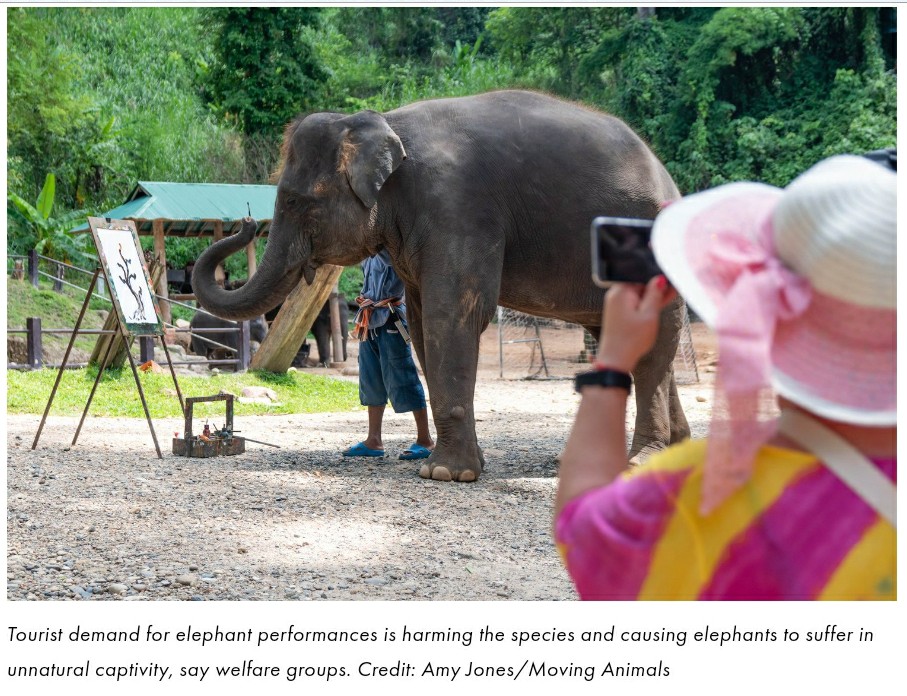
Bathing captive elephants  is promoted as a popular tourist activity throughout Thailand, but animal welfare experts say the activity is dangerous to humans and fuels the exploitation of elephants. Tourist demand for elephant performances is harming the species and causing elephants to suffer in unnatural captivity, say welfare groups. 

Like many other elephant ‘sanctuaries’ in the country, the Koh Yao Elephant Care Center offers tourists the opportunity to feed the elephants, along with showers and walks with the animals too. But animal welfare groups have long condemned such experiences. Not only are they dangerous to humans, but the tourist demand for captive elephant experiences is said to help fuel the wildlife trade and lead to the exploitation of the species.

Estimates say that there are just 3.000-4.000 wild elephants left in Thailand’s national parks and protected areas. But the country is also home to approximately 2.800 captive elephants, with the majority kept in tourism venues. As demand for elephant tourism grows, so too does demand for more captive elephants. According to World Animal Protection, this demand is leading to wildlife farming where elephant breeders are earning large sums of money for elephant calves who are then sold into a life of captivity.

Once sold into captivity, these animals live in unnatural and often miserable conditions. A recent comprehensive report assessed nearly 4.000 elephants in over 350 venues across Asia and found that 63 percent were living in "severely inadequate conditions". When not performing or interacting with tourists, captive elephants were typically kept on short chains in noisy, dirty conditions, and had access to only poor diets and very limited medical care. In order to learn how to perform or interact with tourists, trainers use cruel, punishment-based training on the elephants, including hitting the animals with a bullhook - a long stick with a sharp, metal hook on the tip. 

As well as elephant exploitation, World Animal Protection points out that physical interaction with captive elephants poses a significant danger to humans. The group estimates that one person is killed on average for each male elephant being held in captivity.


Thailand’s stunning national parks offer tourists the chance to see wild elephants from afar in their natural habitat. While seeing animals in the wild is typically the most ethical approach, Thailand is also home to several reputable, "elephant-first" sanctuaries that offer tourists the chance to witness elephants in an ethical way that doesn’t harm the animals. World Animal Protection keeps a list* of the most responsible elephant sanctuaries, which includes ChangChill, Boon Lott's Elephant Sanctuary, and the Somboon Legacy Foundation and of course Elephant Nature Park.

The group also point out some simple tips to help tourists identify genuine sanctuaries from unethical elephant tourism spots. According to World Animal Protection, many exploitative venues will describe themselves with misleading names including ‘sanctuary’ or ‘rescue centres’, so make sure to do your own research. 

Telltale signs of an irresponsible venue include those that offer tourists the chance to touch elephants and those that offer baby elephants to play with. Visit venues that prioritize elephants being able to enjoy natural behaviours like walking long distances and socializing with other elephants - all with plenty of distance between elephants and visitors. 

If you love animals, please, avoid venues that don't have elephants’ best interests at heart and do not be part of the problem. Be part of the solution. 


*Friendly Tourist Guide

https://youtu.be/BSDSGGJL0LM?si=PGvO7C7KKmSxrlHc

Σχετικά δημοσιεύματα: 


Τετάρτη 1 Μαΐου 2024

When Marine Parks Close, Whales and Dolphins Face Uncertain Future


Άρθρο της Jessica Scott-Reid στην ιστοσελίδα Sentient, στις 18/04/24, για το αβέβαιο μέλλον των  δελφινιών που προέρχονται από τα δελφινάρια που κλείνουν 


The 38-acre oceanarium known as the Miami Seaquarium has been ordered to close. Last month, after a series of federal inspections found the facility in disrepair, and the welfare of its animals in jeopardy, the decades-old entertainment center had its lease terminated by the Miami-Dade County mayor’s office. Meanwhile, north of the border, headlines suggest a similar fate for Canada’s Marineland. While much of the public has shown greater disdain for keeping marine animals in captivity, a new conversation is beginning to emerge. Researchers and advocates are now grappling with what will happen to all the captive whales, dolphins and other animals if these facilities close. 

For the vast majority of marine animals born in captivity and dependent on people for survival, returning to the wild is not an option (save for some fish). So, where can they go? In conversations with five experts, the one clear answer to emerge is that there does not appear to be one answer. This is because, as ecologist and science writer Spencer Roberts tells Sentient, each animal is unique, as is their current status and future needs. “Treatment for animals in derelict aquaria like Seaquarium and Marineland is delicate and complex,” he says. “It truly has to be approached on a case-by-case basis.”

However, there does appear to be some general consensus on what might be the best-case, worst-case and most realistic scenarios. But the very worst case scenario for all of these captive whales, dolphins and other animals, would be mass euthanasia — on this our experts agreed. 

The best option for captive animals in need of new homes, according to most of our sources, is for animals to be relocated to sanctuaries that will allow them to safely live in their natural environments, while still receiving necessary care from humans. 

At the moment, there exists one such place for beluga whales, off the coast of Iceland in Klettsvik Bay. Two belugas, Little White and Little Grey, who were captured off the coast of Russia before being sent to a park in China, now live in a tank on land at the facility. They are currently working to build up the health and stamina needed to live in the sanctuary bay after so many years in tanks, following an unsuccessful attempt to return them to the water last year. 

For dolphins, one sanctuary is currently developed by the Baltimore-based National Aquarium, to be located in the Caribbean, and another whale sanctuary is being developed off the coast of eastern Canada. “We at the Whale Sanctuary Project are preparing a sanctuary for belugas and orcas in Nova Scotia,” explains Dr. Lori Marino, founder and president of the project. She adds that her team has “expressed our interest in some of the Marineland Canada belugas over the years. We would be able to welcome several of them.” Marineland, for its part, denies the rumors of an imminent closure. 

Marino, who is also a neuroscientist specializing in animal behavior, sees the general transfer of captive cetaceans to sanctuaries as a two-step process. “First is a complete health assessment of all the whales, and then veterinary intervention to get the whales as healthy as possible while learning behaviors that they need to perform to be transferred,” she says. “Second, they would go to coastal sanctuaries to live out their lives.” But as Marino recognizes, “This means that we need many more sanctuaries than we currently have.” There are an estimated 350 or more whales in captivity worldwide, over 3000 dolphins, and many other animals such as sea lions and walruses. The reality is that sanctuaries cost money — millions of dollars, in fact — to create and maintain. 

The Whale Sanctuary in Nova Scotia is funded by private donors, but Camille Labchuk, executive director of Canadian animal law organization Animal Justice, tells Sentient that government funding should help support captive animals in need of new homes. “Placing dozens of marine mammals and hundreds of land mammals and birds is a massive task,” she says, “and we believe governments should step in to play a role and help come up with solutions.”That means, as Labchuk told The Globe and Mail last year, “governments should step in to fund and expedite seaside sanctuaries, and force places like Marineland to help pick up the tab through reparations for the decades of harm they have caused to these smart and sensitive animals.”

Sanctuaries also take time to develop – lots of it. The Whale Sanctuary Project has been in the works for at least seven years, and is still not up and running. Originally slated for operations to begin by 2023, the sanctuary has no official opening date. 

Many sanctuaries have been proposed by various charities, but persistent environmental, political and financial challenges have proved those as unviable, at least in the near future,” says Phil Demers, a former trainer at Marineland, turned whistleblower. “More and more animals are needing help and fewer places are capable of offering it,” Demers adds. 

While moving thousands of animals to newly built sea-based sanctuaries seems like a far off endeavor, the next best option, explains Roberts via X (formerly known as Twitter), may be to have facilities like the Miami Seaquarium renovated to transition to a sanctuary model. 

Sanctuaries prioritize the needs and wellbeing of animals over the desires of a paying public. For example, according to non-profit advocacy group Dolphin Project, at sanctuaries “every attempt is made to make the dolphins’ lives as natural and independent as possible,” which includes not allowing visitors (permitting for educational purposes only) to interact with the animals, nor requiring animals to perform. “It is a place where the dolphins’ needs are met with no strings attached,” it states online, and “makes educational material available to the public about the wrongs of capturing, confining, breeding, and exploiting dolphins in shows and various interaction programs. 

”Since there aren’t enough operational sanctuaries to house the marine animals who may come from closing entertainment parks in the future, transitioning existing facilities into sanctuaries could be a way to fill the gap. But this would be a pretty massive undertaking, requiring extensive changes to both infrastructures and staffing. Once again, this takes time and money — a luxury that the animals at the Miami Seaquarium and perhaps Marineland don’t have. 

Veterinarian Dr. Crystal Heath, who is also executive director of non-profit vet advocacy group Our Honor, says a more realistic solution for captive marine animals might be to place them at institutions accredited by the Association of Zoos and Aquariums. AZA accreditation “recognizes institutions that meet the highest professional standards for animal welfare, scientific education and staff training,” states the organization online. 

The Miami Seaquarium is not AZA accredited, along with most existing parks. “Less than ten percent of the 2,800 wildlife exhibitors licensed by the United States Department of Agriculture under the Animal Welfare Act meet the more comprehensive standards of AZA accreditation, as per their website,” says Heath. (AZA facilities do still participate in breeding and selling animals, euthanizing “overstock” animals, and holding animals captive for their entire lives.) 

Sending marine animals to a kind of transitional facility if there’s not enough room at a sanctuary sounds like a promising solution, but the transition process could take years, if it happens at all. So while it sounds like a good idea, says Phil Demers, who is now an advocate for ending parks like Marineland or Seaquarium, this scenario could end up recreating sea park conditions. The bottom line, Demers explains, “we have a perpetual problem until something drastically changes. 

”For now, a number of researchers and advocates are also working to ban marine entertainment parks outright. And they’ve had some success. The Canadian government has already enacted a ban against imports of whales, dolphins and porpoises, along with breeding within the country — an effort spearheaded by Animal Justice. Several other countries have also implemented bans or strict regulations on whale and dolphin captivity, including the UK, India, Switzerland, South Korea and France. 

Ultimately, as marine parks continue to fall out of public favor across much of North America, more of these entertainment spots will shutter, either now or at some point in the future. The question of what to do with all of the captive animals will have to be answered, even as costs and challenges remain. 


Πηγή: https://sentientmedia.org/marine-parks-close-whales-dolphins/


Photo


Καταχωρήθηκε